
When Your Body Stops Making Sense: Living and Moving with Fibromyalgia
Apr 02, 2026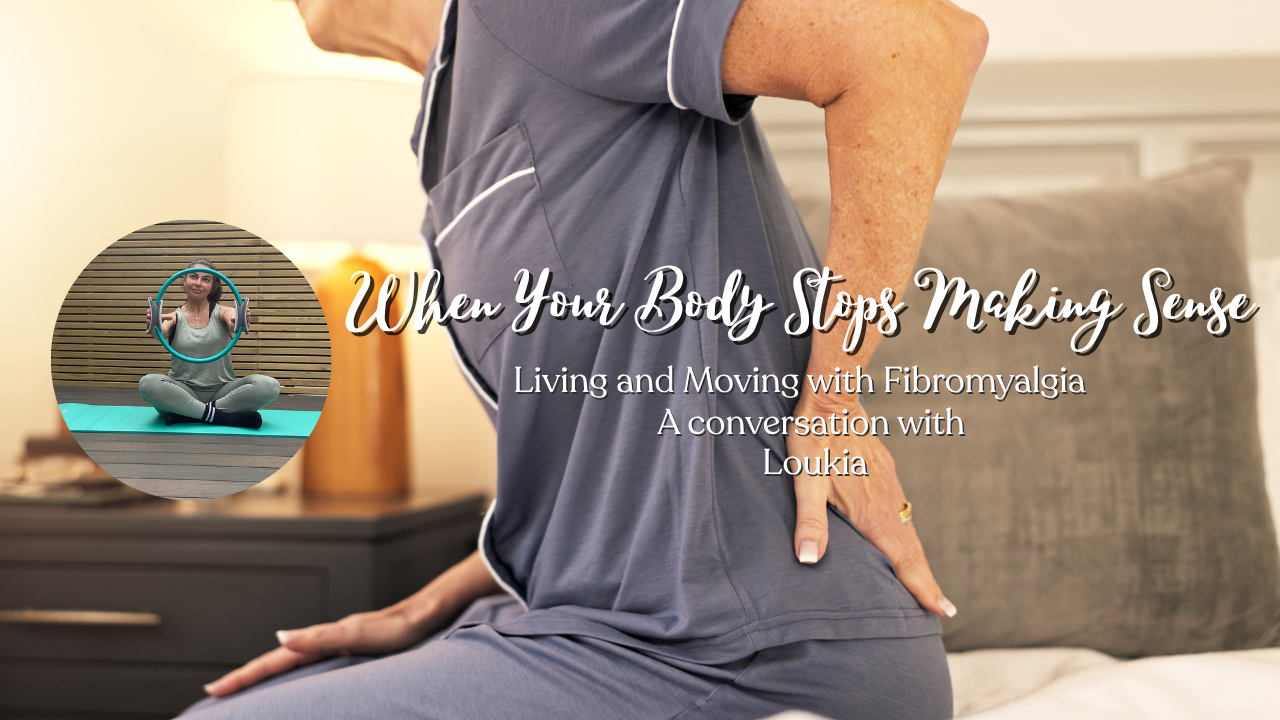
There’s a moment for some people where their body stops behaving the way it used to.
No clear injury.
No obvious reason.
Just a quiet shift into something unfamiliar.
One day you’re functioning normally.
The next, you’re dealing with fatigue, pain, confusion—symptoms that don’t follow any clear pattern.
And that’s where the real challenge begins.
The unpredictability no one prepares you for
Fibromyalgia is one of the most misunderstood conditions in modern healthcare.
Not because it’s rare.
But because it doesn’t present in a way that fits neatly into a box.
The symptoms are broad:
- widespread pain
- fatigue that doesn’t resolve with rest
- brain fog
- sensitivity to temperature, touch, and stress
- disrupted sleep
- emotional load that often follows
But the defining feature isn’t just the symptoms.
It’s the unpredictability.
One day you can function.
The next day, your body feels like it’s shutting down.
There’s no clear cause.
No consistent trigger.
No reliable pattern.
And that creates something deeper than physical discomfort—
It creates a loss of trust in your own body.
This is not just physical
Fibromyalgia is often treated as a musculoskeletal issue.
It’s not.
It is a nervous system condition.
The body becomes more sensitive.
The brain amplifies signals.
The system struggles to regulate itself.
What feels like random pain is often the result of a system that is on high alert.
That’s why symptoms can:
- move around the body
- appear suddenly
- intensify without obvious cause
- disappear and return again
This is not inconsistency in the person.
It is variability in the system.
Why pushing harder makes it worse
This is where many people—and many instructors—get it wrong.
The instinct is to push through:
- do more
- build strength
- increase intensity
- “stay consistent”
But for someone with fibromyalgia, that approach can backfire.
Because the system is already overloaded.
Adding more stress—whether physical or emotional—can push the body further into dysregulation.
This is why someone might:
- feel worse after exercise
- experience flare-ups after “doing too much”
- struggle to recover
It’s not a lack of discipline.
It’s a lack of appropriate support.
Movement needs to change
When you understand fibromyalgia through the lens of the nervous system, your approach to movement shifts.
It becomes less about performance and more about regulation.
Less about intensity and more about awareness.
This is where Pilates—when taught properly—becomes powerful.
Not as a workout.
But as a way of reconnecting to the body.
Through:
- breath
- slower, controlled movement
- sensory awareness
- intentional pacing
The body begins to feel safer.
And when the body feels safe, it can start to adapt again.
Some days will look different—and that’s the point
There is no “perfect” session for someone with fibromyalgia.
Some days they will move well.
Other days they may need to rest.
Some days they will feel strong.
Other days they may lie on the mat and breathe.
Both are valid.
Both are necessary.
Progress is not linear here.
It’s layered.
And it requires patience, consistency, and a willingness to meet the body where it is—not where you think it should be.
Lifestyle is not optional
Movement alone is not enough.
Fibromyalgia requires a broader level of awareness and responsibility.
Because everything impacts the nervous system:
- sleep quality
- hydration
- food choices
- caffeine and alcohol
- stress load
- emotional environment
These are not secondary factors.
They are part of the condition.
For many people, small shifts—better sleep, less caffeine, more hydration—can significantly reduce the intensity of flare-ups.
Not eliminate them.
But make them manageable.
Being understood changes everything
One of the most difficult parts of fibromyalgia is that it’s invisible.
From the outside, someone can look fine.
From the inside, everything feels off.
When people don’t understand, it creates doubt:
- “Maybe it’s in my head”
- “Maybe I’m overreacting”
- “Maybe I just need to try harder”
This is where the role of a skilled instructor or practitioner becomes critical.
Not just to guide movement.
But to recognise what’s happening.
To listen. To adapt. To validate.
Because being understood is often the first step toward rebuilding confidence.
🎧 Want to understand this more deeply?
If this resonates—whether for you or for someone you work with—there is more to explore.
👉 Listen to Episode 76 of The Pilates Lounge Podcast: Living With Loukia - A story of Fibromyalgia
Join the Pilates Muse Publication
Explore the world of Pilates through our bi-weekly newsletter, carefully crafted to bring the essence of Pilates directly to your inbox.
Each issue is thoughtfully curated to inspire, educate, and connect you with the timeless principles of Pilates.
See you inside!
We hate SPAM. We will never sell your information, for any reason.

